
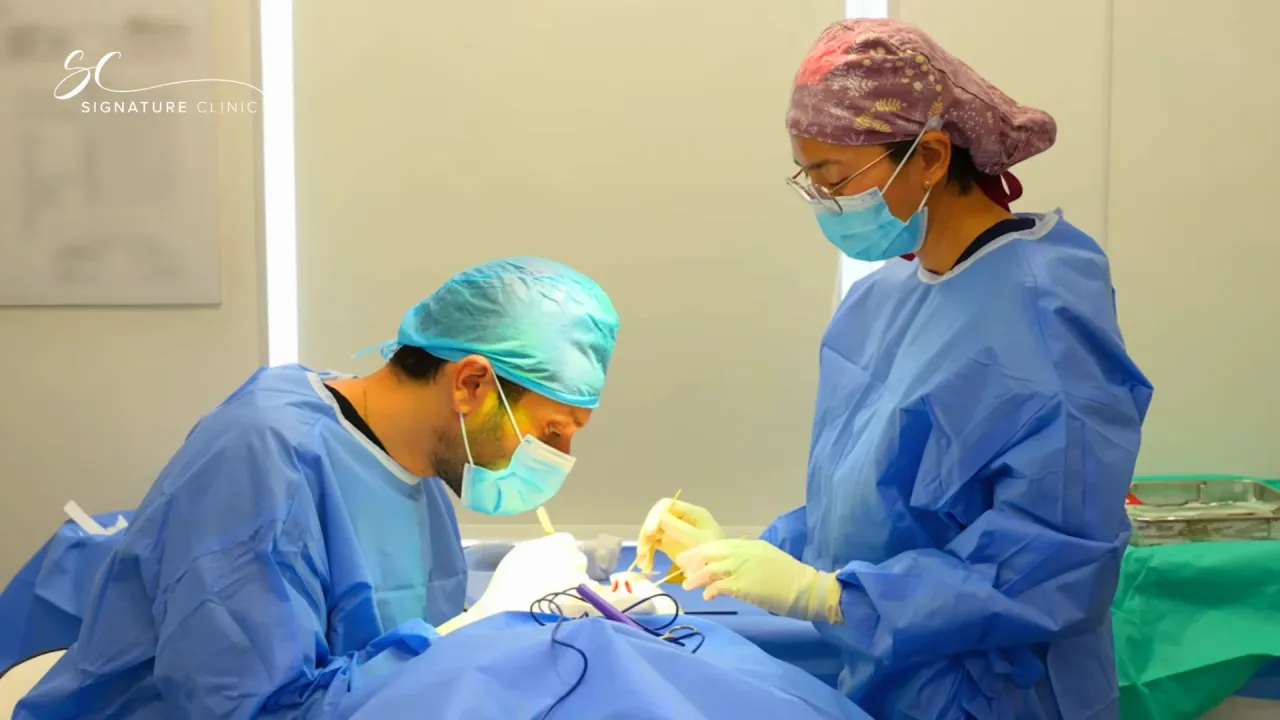
Deciding to have eyelid surgery is a personal choice, and it often starts with a feeling rather than a single moment. For Rowenna, it was a sense that she looked more tired than she felt. In this video, she shares her upper blepharoplasty journey at Signature Clinic, from her reasons for choosing the procedure to how she felt straight after surgery. Her surgeon, Dr Mohamed Abdelhady, also explains what he noticed at her consultation, how the procedure is carried out, and what recovery usually looks like.
Meet Rowenna

Rowenna works in the film industry as a security guard on locations. Her job puts her around a lot of glamorous people, and after a few years of working long days, she decided it was time to do something for herself.
“I’ve been thinking about having this procedure for a while. Felt quite tired, run down, and I don’t feel as pretty as I used to be.”
Like many patients considering upper blepharoplasty, Rowenna’s goals were simple and personal. She was not looking to change who she is. She wanted to look as rested as she felt.
“I’m hoping that my makeup will sit better. I’m hoping that I’ll look less tired. It is for me.”
That last line matters. Cosmetic surgery should always be a decision you make for yourself, and Rowenna was clear that this was about her own confidence, not anyone else’s expectations.
Why Rowenna chose Signature Clinic

Many patients come to Signature Clinic through a recommendation, and Rowenna was no different. A close friend of hers, a nurse who had been doing her Botox, had already had eyelid surgery at our Manchester clinic.
“She had her eyelids done, and she just looks so much better. She feels so much better.”
Seeing a friend’s experience first-hand gave Rowenna the reassurance she needed to book her own free consultation.
What is upper blepharoplasty?

Upper blepharoplasty is a procedure that removes excess skin from the upper eyelids. Over time, the skin in this area can lose elasticity and begin to fold over the lash line, creating a heavy, hooded look that can make you appear tired even when you are well rested.
At Signature Clinic, upper blepharoplasty is usually performed under local anaesthetic as a day case procedure, which means you can go home the same day. The incision is made along the natural crease of the upper eyelid, so it sits within the fold once healed.
The consultation: what Dr Abdelhady noticed

Every procedure at Signature Clinic starts with a free consultation, and this is where your surgeon examines your eyelids, listens to your concerns and talks you through realistic outcomes.
During Rowenna’s consultation, her main concern was heaviness over her eyelids. Dr Abdelhady also noticed something specific in her case.
“I noticed something very, very specific in her case, that she has also what we call brow ptosis, or a low level of the eyebrow, that actually made the problem more obvious, that she has more skin over the eyelid as well.”
Brow ptosis means the eyebrows sit lower than usual. When the brows are lower, the extra skin on the upper eyelid can look more pronounced. Spotting this at consultation is important, because it helps the surgeon explain what upper blepharoplasty can and cannot achieve for your individual anatomy.
Dr Abdelhady examined Rowenna’s eyelids and discussed the expected outcome with her before she went ahead with surgery. This kind of honest, detailed conversation means you go into the procedure knowing exactly what to expect.
Surgery day: step by step

Dr Abdelhady talks through the steps of upper blepharoplasty in the video.
Marking and measurements: The procedure begins with careful marking and measurement of the upper eyelid. This determines exactly how much excess skin will be removed.
Local anaesthetic: Next, local anaesthetic is injected to numb the eyelid. Dr Abdelhady describes it simply: “As I tell my patients all the time, the local anaesthetic is a very, very tiny sharp scratch, then numb the whole eyelid.”
Removing the excess skin: Once the area is numb, the excess skin is removed as measured.

Closing the incision: The incision is then closed with sutures. If your stitches are not self-dissolving, they are removed between 7 and 10 days after surgery.
How Rowenna felt straight after surgery

One of the most common worries about eyelid surgery is whether it will hurt. Rowenna’s answer was clear.
“It wasn’t painful in the slightest. It does feel a little strange, but it’s nothing to be scared of.”
She also felt well enough to leave the clinic comfortably.
“I don’t feel dizzy. I don’t feel sick. There was no pain, no issues. To be honest, I’ve had more problems in the past having fake eyelashes put on.”
Rowenna was given antibiotics and her medication before going home, and the team talked her through her aftercare in detail.
“Everyone’s run through everything I need to do. And I’ve got a goody bag as well, which is a bonus.”
The care team experience

Surgery is about more than the procedure itself. How you are looked after before, during and after makes a real difference to how you feel on the day. Rowenna spoke warmly about the team who cared for her.
“Team are absolutely lovely. They explain everything that’s going to go on and they’re very reassuring. And they’ve got a good sense of humour.”
Recovery after upper blepharoplasty
The first week: Take it easy. “Nothing harsh, nothing like gym, running. These activities are not allowed, especially during the first week.” Driving should also be avoided during this time.
Bruising and swelling: Some bruising and swelling is normal after blepharoplasty, and how long it lasts varies from person to person. As Dr Abdelhady says: “Everyone is different, but the average is 2 weeks of bruising and swelling. And after 2 weeks, patients should feel improvement, especially in the swelling.”
Returning to work: Most patients feel comfortable returning to desk-based work within 5 to 7 days.
Full recovery: Full recovery is typically complete within 2 to 4 weeks.
Your surgeon will give you detailed aftercare instructions, and the team will be on hand if you have any questions during your recovery.
Rowenna’s advice to anyone considering eyelid surgery
Rowenna’s message to anyone feeling nervous about upper blepharoplasty is simple.
“Be assured. It’s easy.”
Is upper blepharoplasty right for you?
You may want to consider upper blepharoplasty if you:
- Notice excess skin folding over your upper lash line
- Feel a sense of heaviness over your eyes
- Look tired even when you are well rested
- Find that your eye makeup no longer sits the way it used to
The best way to find out if the procedure is right for you is to speak to a surgeon. At your free consultation, your surgeon will examine your eyelids and brows, discuss your goals and explain what results you can realistically expect.
Frequently asked questions
Is upper blepharoplasty painful?
How long does bruising and swelling last after upper blepharoplasty?
Everyone heals differently, but on average bruising and swelling last around 2 weeks. Some patients notice improvement sooner.
When can I exercise after eyelid surgery?
Can I drive after upper blepharoplasty?
Driving should be avoided during the first week after surgery.
What is brow ptosis?
Brow ptosis is when the eyebrows sit lower than usual. It can make excess skin on the upper eyelid look more noticeable, which is why your surgeon will assess both your eyelids and brows at your free consultation.
Will I go home the same day?
Book a free consultation
If Rowenna’s story sounds familiar, the first step is a conversation with one of our surgeons. Book a free consultation with us to discuss your goals and find out whether upper blepharoplasty is right for you.
Book a free consultation | Learn more about blepharoplasty | Meet Dr Mohamed Abdelhady
Disclaimer: This content is for informational purposes only and does not constitute medical advice. Always consult a qualified healthcare professional before undergoing any cosmetic or medical procedure.


