Many people look in the mirror and notice changes around their eyes long before other parts of the face are affected. As we get older, the delicate skin around the eyes can lose elasticity, leading to looks that seem tired, heavy or hooded, a common concern for adults across the UK. Distinguishing between hooded eyes (often a lifelong trait) and changes caused by ageing eyelids can help you decide whether blepharoplasty UK eyelid surgery is an option worth exploring.
This guide explains the differences between hooded and ageing eyelids, when to consider an eyelid lift UK procedure, what blepharoplasty involves, who makes ideal eyelid surgery candidates, and what to expect from a consultation and treatment.
What Are Hooded Eyes and Ageing Eyelids?
The skin around the eyes is the thinnest and most delicate on the face. It’s often one of the first areas to show signs of facial ageing but can also carry genetic traits that make eyes appear hooded even in youth.
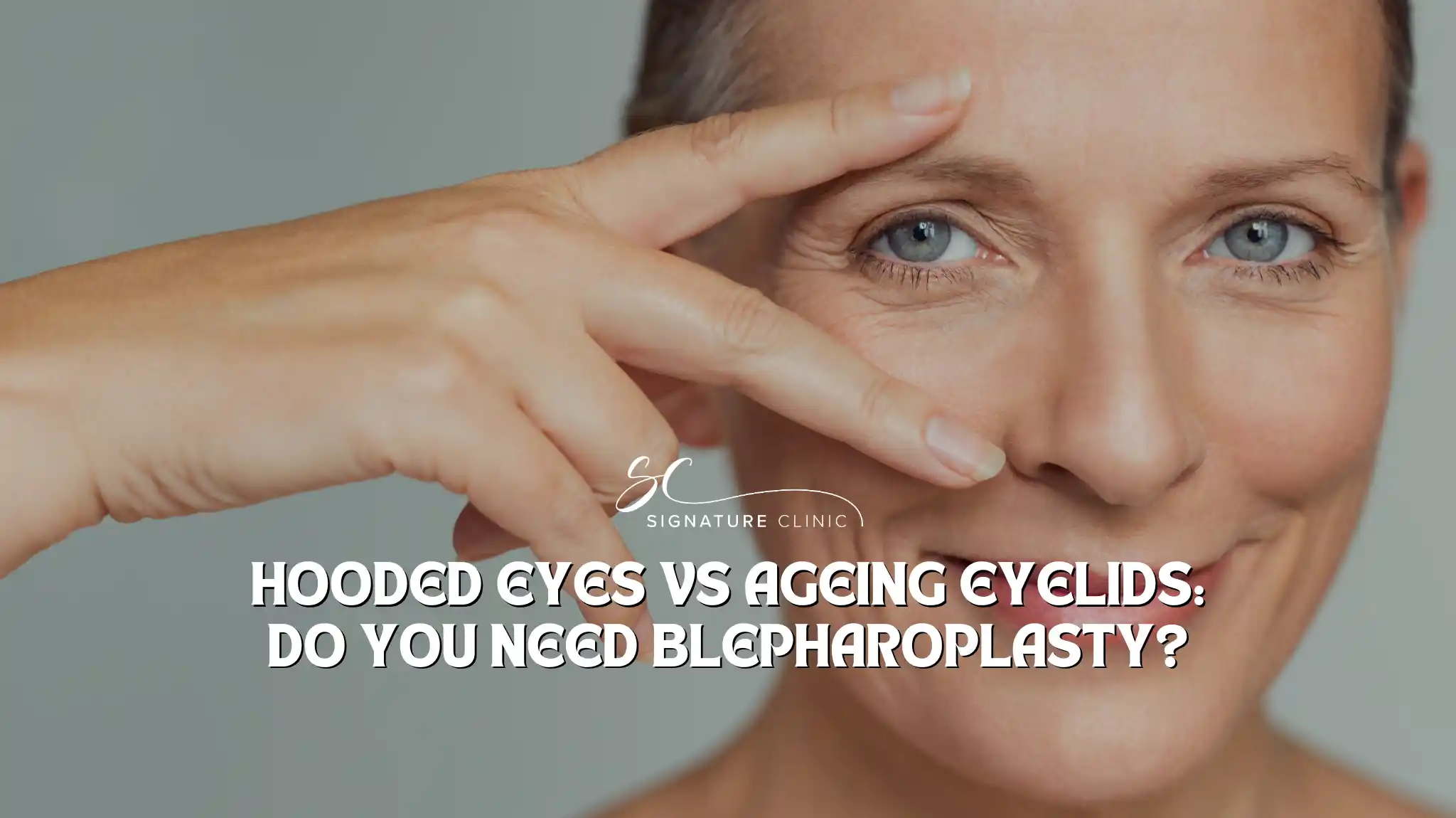
- Hooded eyes vs ageing eyelids can look similar but have different causes.
- Many people are born with naturally hooded eyes, where the upper eyelid skin sits lower or covers part of the eyelid crease from the start. This appearance can be present regardless of age.
- By contrast, ageing eyelids develop over time as the skin loses elasticity and muscle tone, and fat pads around the eyes shift, creating excess skin or puffiness that wasn’t previously present. Ageing changes can make eyelids heavier and more prominent with time.
Understanding these differences helps when considering whether surgical correction might be appropriate. In both cases, blepharoplasty, surgical eyelid reduction is widely used to reduce excess skin and restore a more refreshed eye area.
How Ageing Affects the Eyelids
As we age, several changes contribute to a heavier or more tired appearance around the eyes:
- Loss of skin elasticity — The skin loses collagen and becomes less firm, causing folds or sagging.
- Fat redistribution — Fat around the eye sockets can shift or bulge forward, creating puffiness or under-eye bags.
- Muscle changes — Muscles responsible for eyelid support can weaken, adding to sagging or drooping.
These changes can make the eyes appear smaller, more fatigued or older than they feel. While natural ageing can affect anyone, the severity varies with genetics, sun exposure, smoking, and lifestyle factors. In some cases, ageing leads to functional concerns, such as excess upper eyelid skin interfering with the peripheral field of vision. (turn0search0)
When to Consider Blepharoplasty
Blepharoplasty is the surgical removal of excess skin, fat or muscle from the eyelids. It is often referred to as an eyelid lift and can be performed on the upper lids, lower lids, or both, depending on your goals.
At Signature Clinic, one of the UK’s leading providers of eyelid surgery, blepharoplasty is delivered in a day-case setting under local anaesthetic, meaning patients remain awake but the area is fully numbed, and most can return home the same day.
Signs You Might Be a Candidate
You might consider discussing blepharoplasty with a specialist if you experience:
- Excess skin on the upper eyelids that obscures the natural crease
- Heaviness or hooded appearance that makes you look fatigued
- Difficulties applying makeup because of skin folds
- Droopy eyelids treatment that you feel could improve both appearance and comfort
- Skin that weighs on the eyelashes or slightly impairs the outer field of vision
These concerns can be aesthetic, functional or both. A consultation with an experienced doctor can help you understand whether blepharoplasty might be appropriate based on your anatomy, health and goals.
What Does Blepharoplasty Involve?
Blepharoplasty can be tailored to each individual’s needs. At Signature Clinic, the technique varies slightly between upper and lower eyelid procedures:
Upper Eyelid Surgery
- The incision is placed discreetly in the natural crease of the upper eyelid.
- Excess skin and, where necessary, small amounts of fat are removed.
- This improves the eyelid contour and can make the eyes appear more open and alert.
- In some cases, removing excess skin may modestly improve peripheral vision if sagging skin encroaches on the line of sight.
Lower Eyelid Surgery
Lower blepharoplasty targets puffiness and under-eye bags:
- Incisions are placed just below the lower lash line or inside the eyelid in some cases.
- Excess fat and skin are either removed or repositioned to smooth and tighten the area.
- This results in a less tired and more refreshed appearance.
Combined Procedures
It is common to combine both upper and lower blepharoplasty for a comprehensive rejuvenation. This can create a balanced, natural outcome when the eyes are viewed in harmony with the rest of the face.
Who Is an Ideal Eyelid Surgery Candidate?
Good candidates for blepharoplasty typically:
- Are in overall good health
- Are non-smokers or able to quit before and after surgery to support healing
- Have realistic expectations about results
- Experience either cosmetic concerns or functional issues such as skin obstructing vision
There is no strict age requirement, and individuals over 18 with excess eyelid skin or puffiness may be considered suitable if their anatomy and health support safe surgery. Genetics and natural hooded eye traits may make someone a candidate even at a younger age, provided the goals and expectations are discussed thoroughly with a surgeon.
Recovery and Aftercare
Blepharoplasty is typically performed as a day-case procedure under local anaesthetic, meaning you can usually go home the same day. Many patients return to normal daily activities within a few days, though full healing, including reduction of swelling and bruising, may take a few weeks.
Incisions are made in natural creases or just below the lash line, and scarring is generally minimal and well concealed once healed. Stitches are usually removed around 7–10 days following surgery. Follow-up appointments and aftercare guidance help ensure a smooth recovery.
Benefits of Eyelid Surgery
The advantages of blepharoplasty can be both aesthetic and functional:
- A refreshed and more youthful look by removing excess skin and puffiness
- A more alert and open eye appearance
- In some cases, improved peripheral vision if sagging skin was interfering
- Low-visibility scars due to well-placed incisions
- Long-lasting results, with many patients enjoying benefits for years after surgery
It’s important to remember that blepharoplasty does not stop the ageing process, but it can significantly reverse visible signs of ageing in the eyelid region.
Frequently Asked Questions
What is the difference between hooded eyes and ageing eyelids?
Hooded eyes are often a natural, hereditary trait where the upper eyelid crease is less visible. Ageing eyelids develop due to skin laxity and fat shifts over time. Both can be addressed with blepharoplasty if desired.
Is blepharoplasty painful?
Blepharoplasty is performed under local anaesthetic. Patients feel minimal discomfort during the procedure and mild irritation or swelling afterwards is common but manageable with standard pain relief and aftercare advice.
Will eyelid surgery improve my vision?
If excess upper eyelid skin is blocking your line of sight, removing it can improve peripheral vision. However, blepharoplasty does not correct other causes of vision problems such as glaucoma or retinal issues.
How long do results last?
Results are long-lasting. Natural ageing continues, but the effects of skin removal and contouring typically endure for many years. Individual longevity of results varies with lifestyle and skin quality.
How soon can I return to work after eyelid surgery?
Many patients resume normal, non-strenuous activities within a few days. Complete healing, including fading of swelling and bruising, may take several weeks. Your surgeon will provide personalised guidance.
*Disclaimer: This content is for informational purposes only and does not constitute medical advice. Always consult a qualified healthcare professional before undergoing any cosmetic or medical procedure.